The Topkapı Palace Confectionery Guild
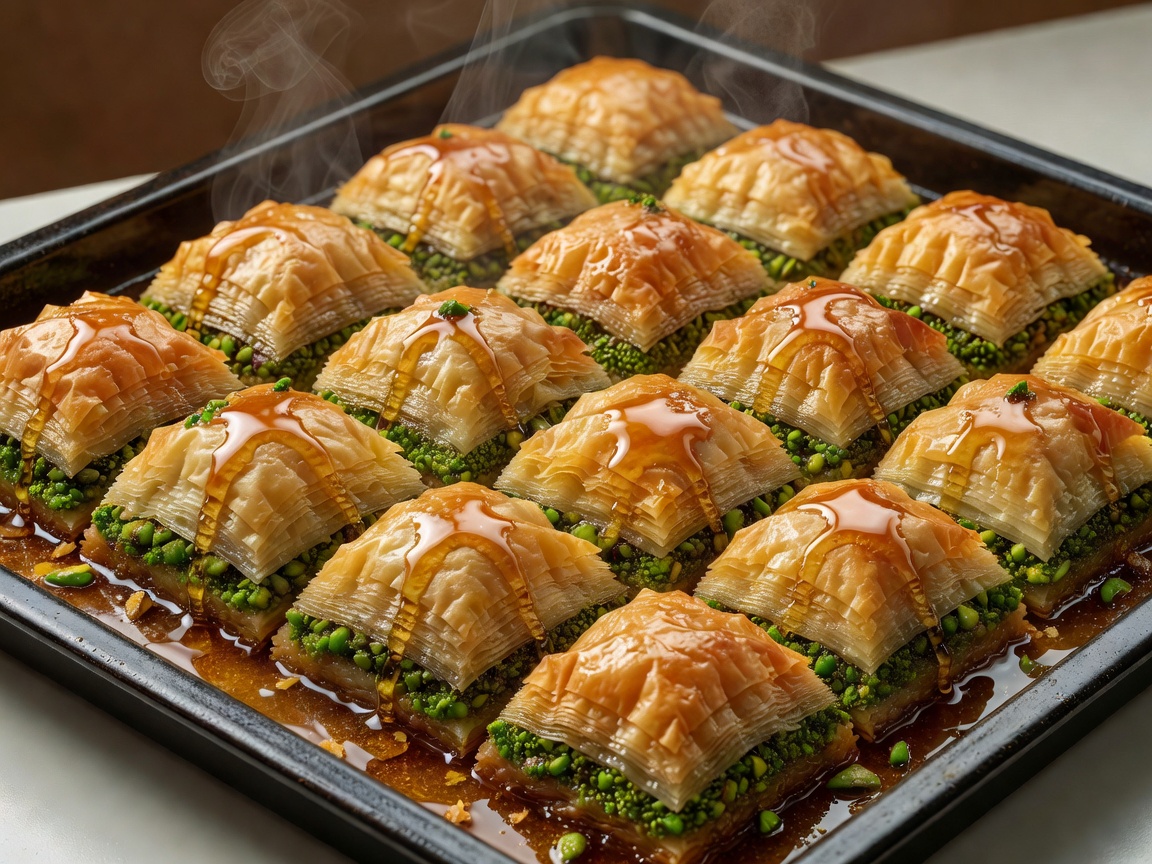
In the 17th century Ottoman Empire, the 15th day of Ramadan witnessed the Baklava Alayı (The Baklava Procession), where the Sultan gifted massive silver trays of freshly baked baklava to the Janissary soldiers in Istanbul. Gaziantep, situated along the ancient Silk Road, emerged as the indisputable world capital of baklava, securing EU protected geographical status (PGI) in 2013.
A true Gaziantep baklava uses Boz fıstık—early harvested pistachios picked in August before they fully ripen. These kernels retain an intense emerald green shade, lower moisture content, and concentrated herbal oils that don't scorch during baking.
Gaziantep Baklava Technical Standards
Dough Sheeting: Wheat starch dusting allows rolling 40 distinct sheets of Yufka pastry so thin that a newspaper can be read through a single layer.
Butter Quality: 100% clarified sheep's milk butter (Sadeyağ) sourced from the pastures of Şanlıurfa.
The "Hiss" Test: Boiling sugar syrup (105°C) is poured onto baking trays fresh from stone ovens; the louder the sizzle, the crisper the resulting baklava.
Turkish Delight (Rahat Lokum) Gel Chemistry
Alongside baklava stands Lokum, pioneered in 1777 by Hacı Bekir in Istanbul. Moving away from heavy honey and flour bases, Bekir introduced cornstarch and refined European beet sugar, producing a translucent, elastic gel matrix infused with Isparta rose water, mastic gum, and pomegranate seeds.
Confectionery Advantages (Pros)
- Long room-temperature shelf life without refrigeration.
- Signature acoustic crunch and buttery aroma.
- Celebrated symbol of hospitality across the Middle East.
Artisanal Complexities (Cons)
- Requires years of rolling pin (Oklava) manual training.
- High-calorie density due to concentrated butter and syrup.
- Extreme heat sensitivity during sugar boiling phase.
The Science of the Bite
Culinary experts advise eating baklava upside down: place the bottom of the pastry against the roof of the mouth. As the tongue compresses the 40 layers, the clarified butter and syrup release directly onto the taste buds, accompanied by a crisp acoustic snap.