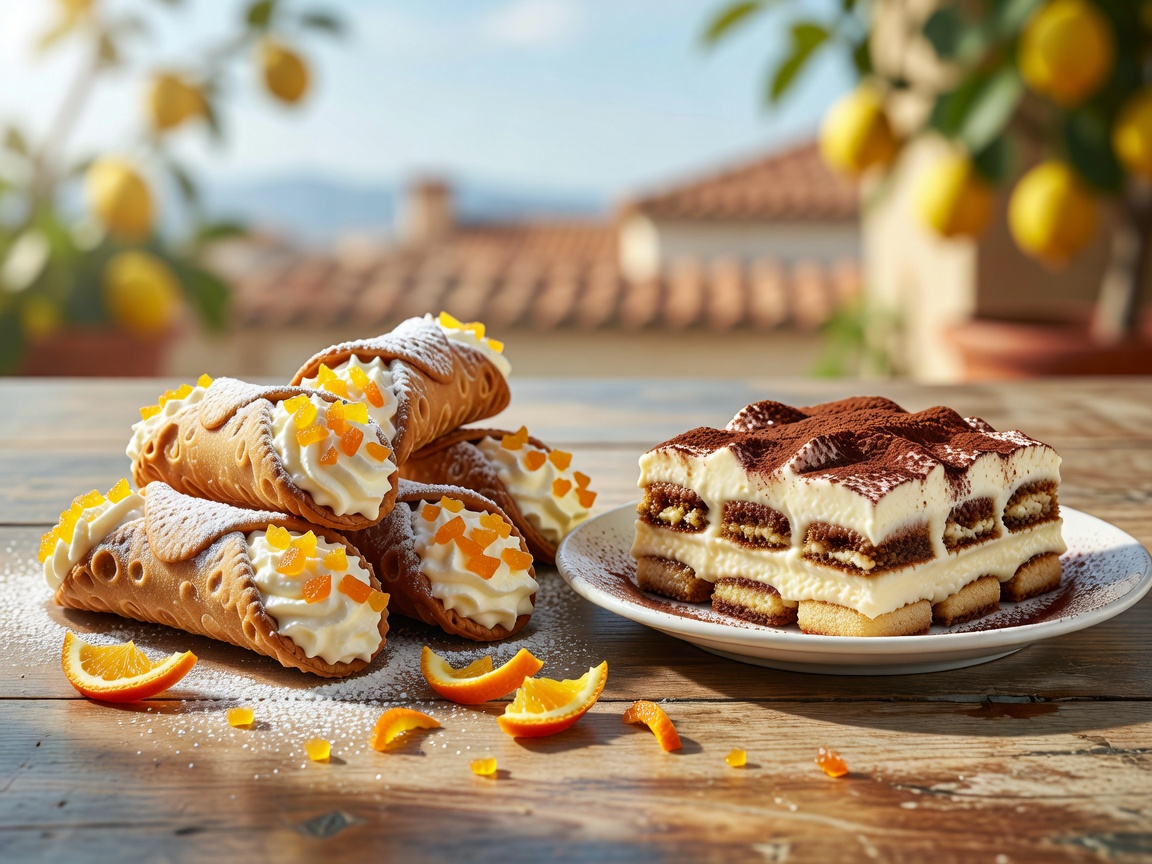
The Arab-Norman Roots of Sicilian Cannoli
Originating in the Caltanissetta region of Sicily during the Emirate of Sicily (831–1091 AD), the Cannolo represents one of the Mediterranean's oldest hybrid culinary achievements. The name translates simply to "little tube," referring to the river cane reeds around which the thin dough was originally wrapped prior to plunging into boiling lard.
The dough secret lies in the interaction between acetic acid (dry Marsala Superiore wine and red wine vinegar) and gluten. When fried at 180°C, the wine evaporates rapidly, inflating thousands of micro-blisters across the shell surface to create that legendary shatter-crisp texture.
Culinary Specs: Authentic Sicilian Cannoli
Dough Base: 00 soft wheat flour, lard (strutto), powdered sugar, cocoa powder, pinch of cinnamon, dry Sicilian Marsala wine.
Filling: Fresh sheep's milk ricotta drained for 24 hours, powdered sugar (30% weight ratio), dark chocolate chips, candied orange peel from Palermo.
Golden Rule: Shells must be filled strictly moments before serving to prevent the moisture of the ricotta from softening the fried crust.
Tiramisù: The Northern Legend of Treviso
Literally translating to "pick-me-up," Tiramisù was formalized in the Veneto region during the late 1960s at Le Beccherie in Treviso by pastry master Roberto Linguanotto. An authentic traditional Tiramisù contains strictly six ingredients: egg yolks, sugar, mascarpone cheese, espresso coffee, Savoiardi (ladyfinger biscuits), and bitter cocoa powder. Traditionalists reject gelatin, whipped cream, or egg whites in the mascarpone custard.
Dolci Strengths (Pros)
- No-bake preparation for effortless restaurant staging.
- Superb contrast between bitter coffee notes and sweet cheese.
- Highly adaptable filling variations with pistachios or citrus.
Common Mistakes (Cons)
- Over-dunking Savoiardi creates a soggy, watery base.
- Using commercial cow milk ricotta yields bland, runny cannoli.
- Raw eggs in Tiramisù require pasteurization for food safety.
Global Impact
Italian dolci established the global benchmark for dairy-driven confectionery. While French pastries lean heavily on butter and laminated dough, Italy's mastery relies on fresh curds (Ricotta di Pecora) and cultured creams (Mascarpone), preserving light, rustic simplicity.