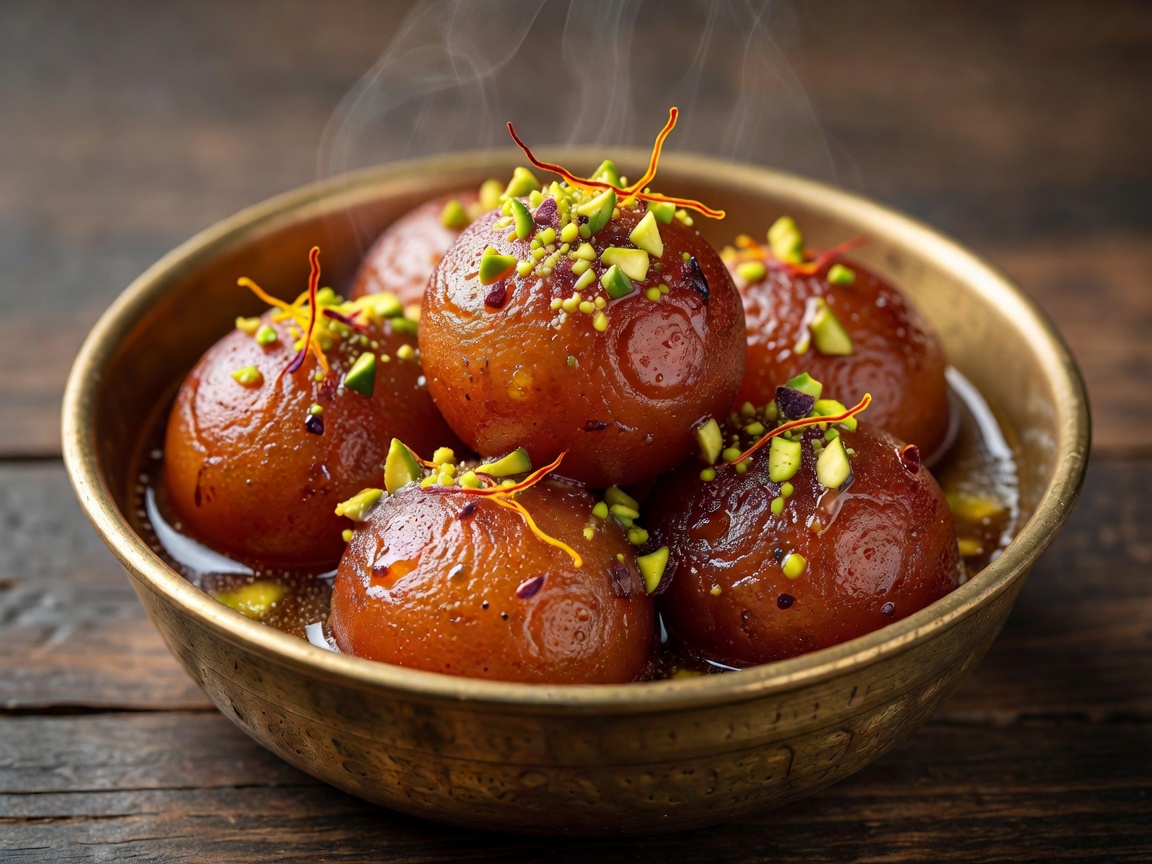
Imperial Mughal Roots of Gulab Jamun
The term Gulab Jamun derives from the Persian words Gol (flower) and Āb (water), referring to rose-scented syrup, while Jamun refers to the native Indian black plum that the dumplings resemble in size and shape. Originating in medieval India as an adaptation of the Central Asian Bamieh fritter, royal chefs under the Mughal dynasty enriched the dough with Mawa / Khoa (whole milk slowly simmered for hours in wide iron karahi pans until all water evaporates).
When kneaded with a tiny portion of all-purpose flour (Maida) and fresh curd cheese (Chenna), the dumplings are shaped into seamless spheres and fried in pure cow ghee at a strictly maintained low temperature (140°C). This allows the heat to penetrate slowly to the core without charring the exterior.
Ingredient Profile: Traditional Gulab Jamun
Dough Composition: Fresh Hariyali Mawa (khoya), unaged cow milk paneer, all-purpose flour, pinch of baking soda, green cardamom seeds.
Syrup Concentration: Single-thread (Ek Taar) sugar syrup infused with Kashmiri Mongra saffron threads, rose water, and crushed green cardamom pods.
Serving Custom: Warm (around 45°C), allowing the caramelized milk sugars to dissolve on the palate.
The Spongy Chemistry of Bengali Rasgulla
In contrast to the fried richness of Gulab Jamun, Eastern India's Bengal region created the Rasgulla (or Roshogolla), pioneered by Nobin Chandra Das in Kolkata in 1868. Fresh cow milk is split with citrus juice to yield non-aged acid-set curds (Chhena). The curds are kneaded vigorously until the casein proteins form an elastic network, then simmered in light boiling sugar syrup, causing the dumplings to swell into springy, juicy clouds.
Mithai Characteristics (Pros)
- Unparalleled depth of pure dairy caramelization.
- Aromatic botanical complexity (Saffron, Rose, Kewra).
- Essential ceremonial dessert for Diwali, weddings, and Eid.
Technical Vulnerabilities (Cons)
- Frying in overly hot ghee causes hard, raw centers.
- Improperly kneaded Chhena causes Rasgullas to disintegrate in syrup.
- High glycemic profile; enjoyed strictly for festive occasions.
The Global Allure of Mithai
Indian sweets celebrate the sanctity of milk in Indian heritage. By converting surplus seasonal milk into stable solids (Mawa, Chhena, and Ghee), Indian confectioners created centuries of shelf-stable festive masterpieces.